

The types of arthritis include more than 100 different conditions, and each type of arthritis can produce different signs, causes, patterns, and treatment needs. Therefore, finding the right cure for arthritis starts with identifying the type. Additionally, effective arthritis pain relief depends on the underlying cause, the affected joints, and the severity of the disease.
Did you know that arthritis affects roughly 25% of the Manitoba population is affected, making it a major public health concern? Manitoba’s cold winters often increase joint stiffness and pain, increasing the need for proactive winter management.
Although many people use the word “arthritis” to describe any joint pain, arthritis does not represent one single disease. Instead, arthritis describes a broad group of conditions that affect joints, tissues around joints, and other connective tissues. Some forms primarily damage cartilage, while others develop because the immune system attacks healthy tissues. Meanwhile, some forms result from crystals, infections, or other inflammatory processes.
Because the types of arthritis behave differently, doctors cannot recommend one universal cure for arthritis or one treatment for everyone. Similarly, the best approach to arthritis pain relief depends on whether the patient has osteoarthritis, rheumatoid arthritis, gout, psoriatic arthritis, or another condition.
Why Are There So Many Types of Arthritis?
The types of arthritis differ because several different biological processes can damage or inflame a joint. For example, osteoarthritis gradually changes cartilage and other joint tissues, while rheumatoid arthritis occurs when the immune system attacks the body’s own tissues. Gout, on the other hand, develops when urate crystals accumulate in and around joints.
Furthermore, infections can trigger reactive or infectious arthritis. For example, Staphylococcus aureus (staph), Streptococcus, gonorrhea, viral infections, fungal infections can cause septic (infectious) arthritis). Similarly, psoriasis, inflammatory bowel disease, and other autoimmune conditions can accompany inflammatory arthritis or cause Psoriatic arthritis or IBD‑associated arthritis. All three conditions — psoriasis, IBD, and autoimmune disorders — activate shared inflammatory pathways (TNF‑α, IL‑17, IL‑23) and target the pathways in joints, tendons, spine, and entheses.
The signs of arthritis can also vary considerably. Pain, stiffness, swelling, warmth, and reduced movement are common, but some patients also develop fatigue, skin changes, fever, eye problems, or symptoms involving other organs.
Therefore, knowing the specific type of arthritis matters. The correct diagnosis helps doctors select appropriate medications, physical therapy, lifestyle measures, and other treatments.
15 Common Types of Arthritis
1. Osteoarthritis is a type of arthritis that affects knees, hips, hands, and spine
Osteoarthritis is a type of arthritis that develops when changes occur in cartilage and other tissues within a joint. Doctors commonly see osteoarthritis in the knees, hips, hands, and spine.
Typical signs of arthritis from osteoarthritis include joint pain during movement, stiffness after resting, swelling, reduced range of motion, and changes in joint function. Morning stiffness often lasts less than 30 minutes.
Age increases the risk, although younger adults can also develop osteoarthritis after joint injuries, repetitive stress, abnormal joint structure, or other risk factors.
There is currently no universal cure for arthritis that reverses established osteoarthritis. However, exercise, weight management, physical therapy, medications, injections in selected patients, and surgery, when necessary, can improve function and provide arthritis pain relief.
2. Rheumatoid Arthritis affects hands, wrists, and feet
Unlike osteoarthritis, rheumatoid arthritis is an autoimmune disease. The immune system attacks tissues that line the joints, producing inflammation and progressive joint damage if the disease remains uncontrolled.
Rheumatoid arthritis commonly affects the hands, wrists, and feet. It often affects joints on both sides of the body in a similar pattern.
The signs of arthritis associated with rheumatoid arthritis include prolonged morning stiffness, joint swelling, tenderness, pain, fatigue, and sometimes low-grade fever or reduced appetite.
There is no simple cure for arthritis that permanently eliminates rheumatoid arthritis. Nevertheless, modern disease-modifying medications can suppress inflammation, reduce symptoms, prevent joint damage, and help patients achieve remission or near-remission, thus offering some arthritis pain relief.
3. Gout is another common inflammatory arthritis
Gout ranks among the most recognizable inflammatory types of arthritis. It develops when excess urate forms crystals in and around joints. These crystals trigger intense inflammation and can cause sudden flares.
Gouts frequently affect one joint at a time, particularly the big toe. However, it can also affect the ankles, knees, and other joints.
The signs of arthritis during a gout attack can appear suddenly. Severe pain, swelling, redness, warmth, and extreme tenderness can make even light contact uncomfortable.
Fortunately, gout has an important distinction from many other types of arthritis because doctors can often control the underlying urate problem effectively. Although people should not expect an instant cure for arthritis, appropriate urate-lowering treatment can prevent future flares and reduce crystal accumulation.
4. Psoriatic Arthritis occurs in some people with psoriasis
Psoriatic arthritis occurs in some people with psoriasis. It affects joints as well as areas where tendons and ligaments attach to bones.
The condition can affect the fingers, toes, spine, knees, and other joints. Some patients develop joint symptoms before doctors recognize skin disease.
Common signs of arthritis include joint pain, swelling, stiffness, fatigue, and tenderness around tendon or ligament attachments. Patients may also develop swollen fingers or toes.
There is no simple cure for arthritis that permanently eliminates psoriatic arthritis. However, early treatment can reduce inflammation, protect joints, and slow disease progression. Therefore, patients with psoriasis should report persistent joint symptoms promptly.
5. Ankylosing Spondylitis is a type of arthritis that causes inflammatory joint pain
Ankylosing spondylitis belongs to the inflammatory types of arthritis that primarily affect the spine and the joints connecting the spine to the pelvis.
Unlike typical osteoarthritis, ankylosing spondylitis often produces inflammatory back pain. Patients may experience prolonged morning stiffness and discomfort that improves with movement rather than prolonged rest.
The signs of arthritis can also include hip pain, reduced spinal flexibility, and inflammation where tendons attach to bones.
There is no established cure for arthritis that reverses ankylosing spondylitis. However, exercise, physical therapy, anti-inflammatory medications, and other disease-modifying treatments can help control symptoms and preserve mobility.
6. Reactive Arthritis develops from infections
Reactive arthritis develops after certain infections. It represents one of the types of arthritis that can occur as a reaction to an infection elsewhere in the body.
Patients may develop joint pain and swelling after an infection affecting the gastrointestinal or genitourinary tract. Some patients also experience eye inflammation or urinary symptoms.
The signs of arthritis may appear after the original infection rather than at the same time.
Unlike chronic autoimmune arthritis, reactive arthritis can improve over time in some patients. Therefore, a permanent cure for arthritis may not always become necessary. Nevertheless, doctors still need to identify and manage the underlying infection and control inflammation.
7. Juvenile Idiopathic is a type of arthritis that affects children
Juvenile idiopathic arthritis represents the most common chronic arthritis affecting children. It belongs to children that may experience joint swelling, stiffness, pain, or difficulty moving an affected joint. However, younger children may not clearly describe their symptoms.
The signs of arthritis can therefore include limping, avoiding certain activities, morning stiffness, or changes in how a child uses an arm or leg.
There is no single cure for arthritis that applies to every child with juvenile idiopathic arthritis. However, early treatment can control inflammation and help protect normal growth, mobility, and joint function.
8. Lupus Arthritis is one of the autoimmune types of arthritis
Systemic lupus erythematosus, commonly called lupus, can cause inflammatory arthritis. Lupus belongs to the autoimmune types of arthritis and rheumatic diseases because the immune system can attack multiple tissues throughout the body.
Lupus arthritis can cause pain, swelling, and stiffness. However, lupus may also affect the skin, kidneys, lungs, heart, blood cells, and nervous system.
Because lupus can affect multiple organs, the signs of arthritis may occur alongside fatigue, rashes, fever, or other systemic symptoms.
There is no straightforward cure for arthritis caused by lupus. Instead, doctors treat the underlying autoimmune disease and adjust therapy according to the organs involved.
9. Sjögren’s-Related Arthritis can also cause dry eyes and mouth
Sjögren’s disease primarily affects glands that produce moisture, particularly the eyes and mouth. However, it can also cause joint symptoms and belongs among autoimmune rheumatic conditions that clinicians consider when evaluating inflammatory types of arthritis.
Patients may experience joint pain and stiffness together with dry eyes, dry mouth, fatigue, or other systemic symptoms.
The signs of arthritis may therefore appear as part of a much broader autoimmune picture.
There is no simple cure for arthritis caused by Sjögren’s disease. Instead, doctors manage the autoimmune condition and treat individual symptoms.
10. Calcium Pyrophosphate Deposition Disease occurs when calcium pyrophosphate crystals accumulate in joints
Calcium pyrophosphate deposition disease, commonly called CPPD, represents another crystal-related form among the types of arthritis.
CPPD occurs when calcium pyrophosphate crystals accumulate in joints. The condition can cause sudden inflammatory attacks that resemble gout.
The signs of arthritis can include sudden joint pain, swelling, warmth, and stiffness. The knee commonly becomes involved, although other joints can also develop symptoms.
Because the underlying crystal deposits can remain in the joint, there is no simple cure for arthritis that removes CPPD in every patient. However, doctors can treat inflammatory attacks and address contributing factors when appropriate.
11. Septic Arthritis is one of the types of arthritis from infection entering the joints
Septic arthritis occurs when an infection enters a joint. This form requires particularly urgent medical attention because bacteria can rapidly damage joint structures and cause serious systemic infection.
Patients often develop sudden joint pain, swelling, warmth, and restricted movement. Fever may also occur.
The signs of arthritis can progress rapidly, particularly when bacteria cause infection.
Unlike many chronic forms of arthritis, septic arthritis can sometimes be effectively cured when doctors diagnose and treat the infection promptly. Treatment may require antibiotics and drainage of infected joint fluid.
Therefore, anyone with sudden severe joint pain, swelling, fever, or a hot joint should seek urgent medical assessment rather than attempting home arthritis pain relief alone.
12. Enteropathic Arthritis and inflammatory bowel diseases are often interlinked
Enteropathic arthritis occurs in association with inflammatory bowel diseases such as Crohn’s disease and ulcerative colitis. It belongs to the inflammatory types of arthritis associated with systemic disease.
Patients may develop peripheral joint pain or inflammation involving the spine and pelvis.
The signs of arthritis can sometimes change according to the activity of the underlying bowel disease, although the relationship varies between patients.
There is no universal cure for arthritis in enteropathic arthritis. Instead, doctors coordinate treatment of both the joint inflammation and the underlying bowel disease.
13. Autoimmune and genetic factors can cause Palindromic Rheumatism
Palindromic rheumatism (PR) doesn’t have one single cause. Experts believe a mix of autoimmune, genetic, and sometimes trigger‑based factors can cause the disease. Palindromic rheumatism causes episodes of joint inflammation that appear suddenly and then resolve. It represents one of the less commonly discussed types of arthritis, but clinicians recognize it because some patients later develop rheumatoid arthritis.
During an episode, patients may experience pain, swelling, stiffness, and warmth in one or more joints.
These signs of arthritis may disappear between attacks, making the condition difficult to recognize.
Because palindromic rheumatism can follow different courses, doctors usually evaluate the patient’s symptoms, examination findings, blood tests, and risk factors. There is no universal cure for arthritis for every patient with palindromic rheumatism, but appropriate monitoring and treatment can reduce attacks and identify patients who may develop persistent inflammatory arthritis.
14. Signs of Axial Spondyloarthritis in young adults include back pain
Axial spondyloarthritis describes inflammatory arthritis that primarily affects the spine and sacroiliac joints. Ankylosing spondylitis represents a radiographic form of axial spondyloarthritis.
Axial spondyloarthritis deserves attention because younger adults can develop inflammatory back pain that people may incorrectly attribute to ordinary muscle strain.
The signs of arthritis can include persistent back pain, prolonged morning stiffness, buttock pain, and symptoms that improve with movement.
There is no simple cure for arthritis that eliminates axial spondyloarthritis. However, exercise, physical therapy, anti-inflammatory medications, and targeted treatments can improve symptoms and help in Axial spondyloarthritis arthritis pain relief.
15. Infectious or Post-Infectious Arthritis
Infections can cause several different joint inflammatory conditions. Therefore, infectious and post-infectious arthritis deserves consideration among the clinically important types of arthritis.
Some infections directly enter and infect the joint, while others trigger inflammation after the infection has occurred.
The signs of arthritis can include joint pain, swelling, warmth, reduced movement, and sometimes fever. However, the clinical pattern depends heavily on the specific infection and mechanism.
Some post-infectious conditions improve after the body clears the infection, while direct joint infections require urgent treatment. Consequently, the appropriate cure for arthritis depends entirely on the underlying cause.
What Are the Most Common Signs of Arthritis?
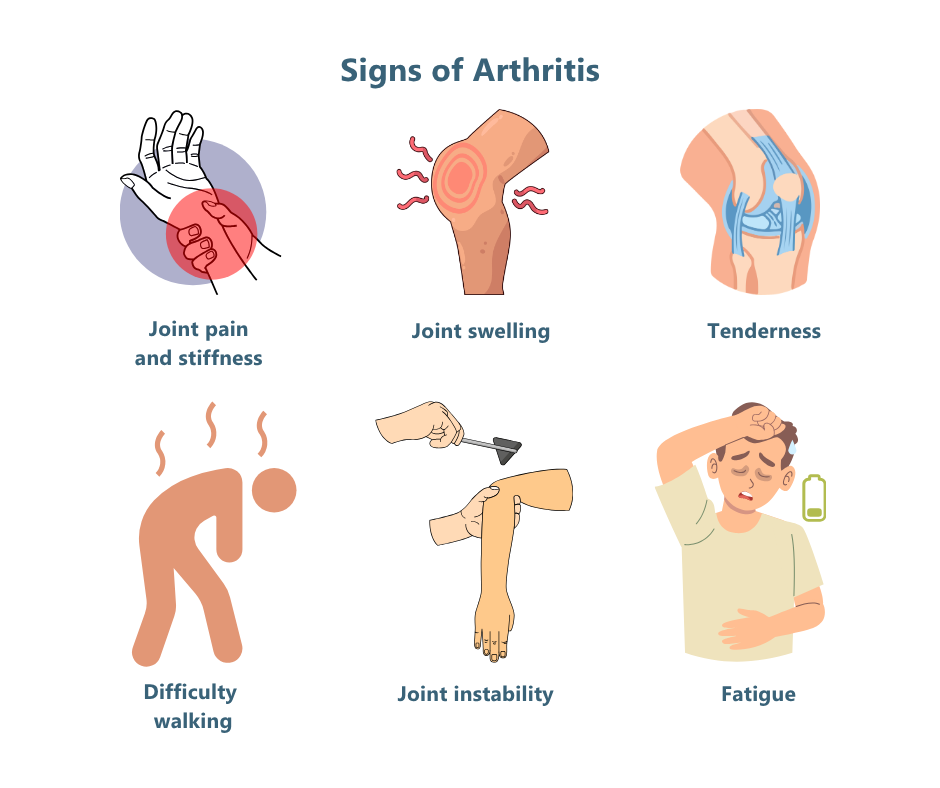
Although the types of arthritis differ considerably, several signs of arthritis appear across multiple conditions.
Common signs of arthritis include:
- Joint pain
- Joint stiffness
- Joint swelling
- Warmth around an affected joint
- Tenderness
- Reduced range of motion
- Difficulty walking or using the affected joint
- Joint instability
- Fatigue in inflammatory arthritis
- Redness during some acute inflammatory attacks
However, the pattern matters just as much as the symptom itself. For example, osteoarthritis often causes pain with joint use, while inflammatory arthritis can produce prolonged morning stiffness. Gouts can produce sudden, severe attacks, while rheumatoid arthritis often affects several joints in a symmetrical pattern.

Is There a Cure for Arthritis?
Patients frequently search for a cure for arthritis, but the answer depends on the specific condition.
For many chronic forms, doctors currently cannot provide a permanent cure for arthritis. However, that does not mean treatment cannot work. Modern therapies can reduce inflammation, control pain, prevent joint damage, and improve physical function.
For example, osteoarthritis treatment focuses on reducing symptoms and improving joint function. Rheumatoid arthritis treatment aims to suppress the autoimmune disease and prevent joint destruction. Gout treatment can lower urate levels and prevent recurrent attacks. Meanwhile, infectious arthritis requires treatment of the infection itself.
Additionally, patients should be cautious about products or supplements that promise a universal cure for arthritis. Different diseases require different approaches.
Arthritis Pain Relief Depends on the Type
Effective arthritis pain relief starts with the correct diagnosis.
For osteoarthritis, it may involve exercise, strengthening, weight management when appropriate, physical therapy, topical or oral medications, injections in selected cases, and sometimes joint replacement surgery.
For inflammatory arthritis requires more than simply treating pain. Doctors often need to control the underlying inflammation to prevent long-term joint damage.
For gout, treating the acute flare while also considering long-term urate management to prevent future attacks.
For rheumatoid and psoriatic arthritis, effective arthritis pain relief often improves when treatment controls the disease itself.
Therefore, repeatedly taking pain medication without determining the cause may provide temporary arthritis pain relief while allowing an underlying disease to continue progressing.
When Should You See a Doctor?
You should seek medical evaluation when signs of arthritis persist, recur, or interfere with daily activities.
You should also seek prompt assessment for sudden severe joint pain, significant swelling, a hot or red joint, fever, or an inability to move the joint normally. These signs of arthritis can sometimes indicate infection or another condition that requires urgent treatment.
Furthermore, persistent morning stiffness, multiple swollen joints, unexplained fatigue, psoriasis with new joint symptoms, or recurrent attacks of severe joint pain should prompt a medical evaluation.
Doctors may use your history, physical examination, laboratory tests, imaging, and sometimes joint fluid analysis to determine which of the types of arthritis best explains your symptoms.
Why Identifying the Type of Arthritis Matters
Knowing the specific types of arthritis matters because treatment differs significantly from one condition to another.
A person with osteoarthritis does not necessarily need the same treatment as someone with rheumatoid arthritis. Likewise, gout requires a different approach from septic arthritis. Therefore, doctors should not treat all joint pain as if it represents the same disease.
The right diagnosis also helps determine the most appropriate strategy for arthritis pain relief and joint protection.
Most importantly, identifying the condition early can prevent complications. For example, early treatment of rheumatoid arthritis can reduce joint damage, while rapid treatment of septic arthritis can protect the joint and reduce the risk of serious infection.
In conclusion, there is no single cure for arthritis that works for everyone. However, appropriate diagnosis and treatment can help many patients control symptoms, maintain mobility, protect their joints, and continue their usual activities. From a clinical perspective, the biggest mistake patients can make involves if every painful or swollen joint represents “wear and tear.” The types of arthritis have very different causes and treatment strategies.
Pay attention to the pattern of symptoms. Sudden severe pain in one joint, prolonged morning stiffness, symmetrical hand swelling, psoriasis with new joint pain, or a hot swollen joint with fever can point doctors toward very different diagnoses. There may not be one universal cure for arthritis, but many forms of arthritis can be effectively managed. The sooner doctors identify the specific condition; the sooner they can choose appropriate arthritis pain relief and treatment designed to protect long-term joint function.
